Before The Break
My break did not begin when my mind broke. It may have begun six months earlier, when my house did.
Later in the evening on August 1, 2021, one of my kiddos was taking a bath upstairs. When the tub was drained, a pipe separated beneath the floor and water began pouring into the dining room below.
All of a sudden we had a waterfall feature in our dining room.
It was chaos. Catastrophic. Directly beneath the bathroom was Heidi’s desk. She worked from home as an online high school art teacher, and her computer, equipment, and cables were all there. It was still summer and classes hadn’t started yet, so I don’t think we were in danger of ruining anyone else’s work. But we had to scramble to pull everything away from the wall and out of the water’s path.
By the time the water stopped, we had pulled everything into the center of the room. The ceiling and wall were absolutely soaked. Water covered the floors. I remember grabbing all the household towels and throwing them down to soak up as much of it as we could.
I don’t remember much more about that night. By that point, I was already making an insurance claim on my phone and taking all the photographs they required. The emergency had shifted almost immediately from stopping the water to documenting the damage. We knew it would be a huge undertaking to repair. We just didn’t know that we would still be living inside it the following April—or even into May.
Over the following months, the damage became background noise that never stopped. There were calls, inspections, moisture assessments, asbestos testing, insurance questions, contractors, delays, and decisions. Parts of the house were opened up or unusable. For a while, six humans were sharing one small, leaky shower. Equipment ran through the day and night. Our routines—and sometimes our family—had to be rearranged around whatever the house required next. The actual reconstruction didn’t begin until the end of December. What had started as one catastrophic evening became the environment in which we lived.
Other parts of my life were shifting too. Heidi and I were trying to understand what marriage meant to us on our own terms. We became public about being polyamorous. There were relationships, questions, discoveries, mistakes, and growing pains. Those stories involve other people and mostly belong outside this one. I’m no longer polyamorous, but that’s a different story too. What matters here is that very little felt settled. My home, my marriage, my relationships, my identity, and my understanding of the future were all being reconsidered at once.
Meanwhile, I kept going.
For months and months, I put on a calm face in the middle of complete chaos. Heidi and the kids were doing so badly that I felt like I had to show them a positive attitude. I didn’t feel like I could let my mask slip, even in front of them. That doesn’t mean it didn’t, from time to time, slip. The furniture was rearranged. The ceiling was open. The bathroom was unusable. The bank account was draining. Stress was everywhere in my life, including my marriage. My ability to relax disappeared. It put Heidi and me to the ultimate test.
I felt like I was falling and I had to pretend I was flying.
During The Break
By February 2022, my thoughts were moving faster than I could hold onto them. I wrote long, rambling messages trying to explain everything flowing through me. One thought opened into another and then another and then another and another and another and another. I was trying to understand my life while my mind raced 40,000 miles per hour ahead of me.
Then, during a moment that should have felt peaceful, I felt a snap. I felt a switch flip. There was a before, and then there was an after.
That is why I call it The Break.
Everything began firing at once. Every task felt like the highest priority. Then I could see every step required to complete each task, and every one of those steps felt like the highest priority too. Any new information became one more emergency my brain had to process.
I needed water, but getting water meant walking through the damaged house. The stairs, the landing, the living room, the kitchen, the dining room, and the bathroom all entered my mind at once. A basic physical need became a map of everything wrong with the house, everything I hadn’t finished, and every way I believed I was failing.
I didn’t want to cook. I didn’t want to clean. I didn’t want to pay contractors, drive anywhere, buy groceries, make the bed, take a shower, or manage one more sequence of steps.
More than anything, I didn’t want to perform.
I didn’t want to smile and reassure everyone. I didn’t want to be the person who could always carry the next thing. I wanted someone else to take care of my family for a while so I could learn how to rest—and maybe learn how to exist without constantly proving that I was useful.
The people around me were scared. So was I. We tried to get emergency help, but there was no immediate switch back to normal. For the next few days, I was medicated but not resting, exhausted but unable to sleep, and largely unable to participate in my own life.
A few days later, we found a temporary solution. I went alone to a place in Westport with groceries, medication, and almost no responsibilities. Away from the house and its endless tasks, I could feel some of the anxiety begin to loosen.
But even there, I didn’t know how to stop. I drank almost full bottle of whiskey and still didn’t feel a thing. My body was on high alert and nothing would settle it. At one point, I told someone that I felt like I wasn’t doing a good job at relaxing. That sentence still breaks my heart a little. I had turned rest into one more task I could fail.
Westport was not enough. I needed more help than a week alone could provide.
Heidi drove me south to a hospital in Vancouver. The drive was mostly silent and tearful. I was drained. I was tired. I felt like my world was ending. I had pushed Heidi to her limit, and she was completely done with me. I wasn’t sure whether I would still have a home when treatment was over.
She still came inside and sat beside me while I waited to be admitted. The stale, over-bright institutional lights made the whole scene feel even darker.
Then I was shown to my room, given medication, and told to unpack.
I unpacked. Then I lay down.
I barely remember the next two days because I spent almost all of them in bed. My doctor came in at different points to check on me, but mostly I slept.
It was the first time I had really slept well in at least a month. I had tried everything I could think of to force my body and brain to stop, including consuming too much NyQuil and whiskey. Nothing had worked.
Finally, the doctors gave me something that calmed my mind.
For months, my thoughts had been moving at 40,000 miles per hour. Suddenly, they slowed down enough for me to process them. I could hold onto a thought. I could understand what it was. I could finally begin to think instead of being carried away by thinking.
The quiet didn’t frighten me. It felt peaceful.
Finally.
After a couple of days, I began noticing the other people. They were all weird and broken like me. I got along with some of them. Others ignored almost everyone. It wasn’t a joyful place. It was sterile. But beneath all the different diagnoses, histories, and ways of coping, we were doing the same work: trying to figure out how to become stable. Some had been through this several times before. For others, like me, it was the first time.
I couldn’t leave the hospital until the next part of my treatment was in place. When my mom picked me up, I wasn’t going home. I had a specific plan to enter a residential treatment program called La Ventana in California.
I spent the next week at a friend’s house. It felt like exile and a holding pattern. We didn’t know exactly when La Ventana would admit me. It took several days for them to open a bed, and all I could do was wait.
Eventually, they called with a place for me. On March 8, I bought a one-way ticket to Los Angeles so I could be admitted the following day.
Buying that one-way ticket felt both frightening and hopeful. I was excited to finally go somewhere that could give me proper help—somewhere I might be able to untangle my mind. But I still didn’t know whether any amount of treatment would be enough for Heidi to welcome me home.
I knew where I was going. I didn’t know what I would be coming back to.
On March 9, I boarded a plane to Los Angeles with all my clothes, my headphones, and my Nettar camera. I documented the hell out of that trip. I photographed the plane, the clouds, Mount Rainier, Mount Hood, and the changing landscape beneath me. Mostly, I listened to music and took pictures through the window.
Counting Crows comforted me to California. They had long been a mental-health band for me, and they were from California, so the theme was almost too perfect. I put on Recovering the Satellites specifically to reach “A Long December.”
I didn’t know what waited for me at La Ventana or whether I would have a home when I finished. For those few hours, all I had to do was look outward and preserve what I saw.
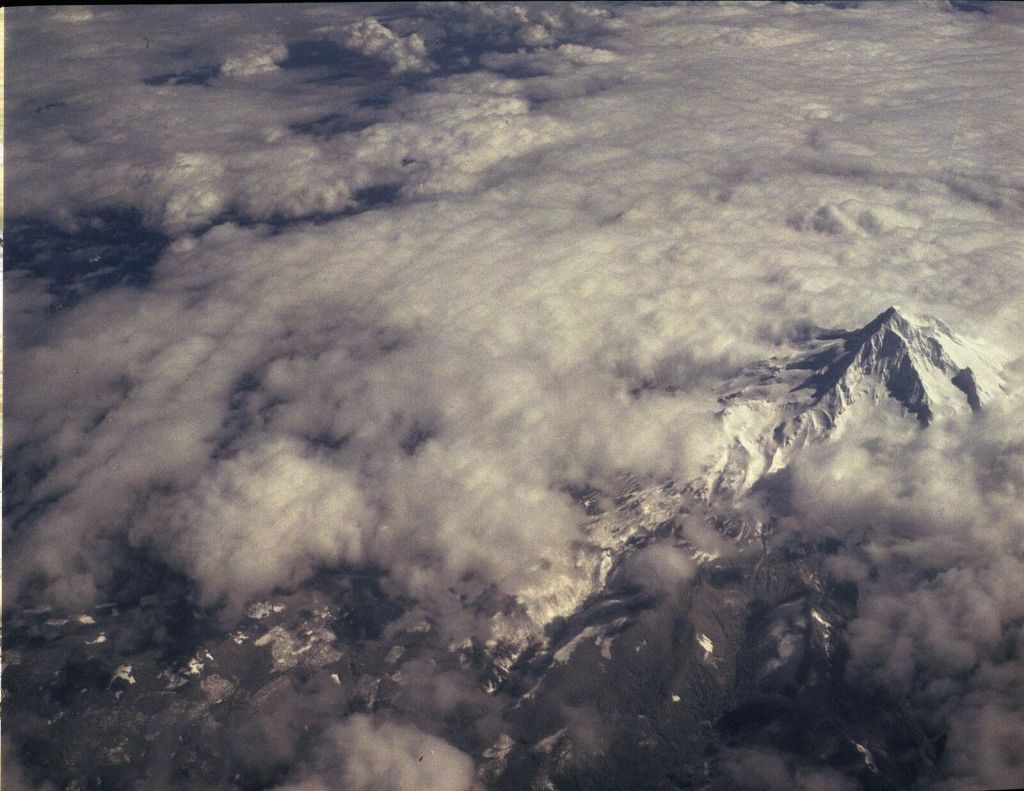
When I landed, driving up through the vast suburban hills of Los Angeles toward La Ventana made “Hillside Manor” feel like a real place I was approaching. The music and the landscape had folded into each other.
I cried through much of the drive from the airport to La Ventana. I was afraid I was losing everything. I was afraid I had broken everything in my life.
At the time, it felt like my wife and kids were done with my chaos. I wasn’t flying to California with the promise that treatment would restore my old life. I was going because I needed help, even if the life waiting on the other side looked nothing like the one I had left.
La Ventana sat in a very cliché Southern California neighborhood in the hills. From the outside, it felt almost as sterile as the hospital had on the inside—clean, uniform, and strangely removed from ordinary life.
But when I walked through the door, it felt like a home.
I went through intake, reached my room, and crashed again. I didn’t get up until the next day, when I joined the group for the first time.
I don’t remember much about my first few days at La Ventana. But over time, I became friends with almost everyone in the house. We formed a remarkably tight group.
There was something comforting about having people who could simply be my friends for that one month. None of us needed to pretend we had arrived with our lives in order. We sang karaoke. We made jokes. We shared meals and stories. We even staged a small sit-in to get one staff member moved to another house after she repeatedly treated us like children.
It was a weird time.
I don’t want to call it a good time. The work was difficult, and the entire month hurt. But I was surrounded by kind humans who saw who I was on the inside—not merely my diagnosis.
Our days had a structure. We woke up and took short walks together—very short walks for someone who had been hiking for miles with his camera only a few weeks earlier. There were group sessions and individual therapy, along with music, art, yoga, horses, and occasional trips to the beach.
We had our own cook. She made our meals, treated us with tremendous kindness, and would even pick up things we wanted from Costco for our time in the house.
For months, I had been trying to anticipate and complete every task for everyone around me. At La Ventana, other people decided what came next. Someone prepared the food. Someone established the schedule. Someone reminded me where to be. My job was to show up and do the work.
It felt so good to have nothing to do except focus on my mental health. For the first time in my life, nobody needed me to pretend I was flying. I was finally allowed to land.
Like I said: weird, but kind of nice.
For a little while, we made a home together.
With the noise quieter and my daily responsibilities temporarily carried by other people, I could finally face how much damage I had caused.
I had lived most of my life at full speed without understanding why I raced through every part of it. I had only started medication for ADHD about a year earlier. I didn’t yet understand that I was neurodivergent, and I didn’t know I what else was going on with me, but I knew it wasn’t just normal ADHD. I had no language for what my brain was doing and very few tools for managing it.
That explained some of my behavior. It did not erase the harm.
Living for years without that understanding had created enormous problems for Heidi and me. At La Ventana, I began looking directly at those problems instead of trying to outrun, solve, or smile my way past them. I also began digging into the damage Mars Hill and Mark Driscoll had done to me. During one exercise, we were asked to write a letter to an abuser and then burn it in a bonfire ceremony on the beach.
Naturally, I chose Mark.
I don’t remember what I wrote. I burned the letter and let the words and anger go with it.
Honestly, from that moment on, I felt lighter.
The therapist working with me individually did something I will never forget. On her commute to the house each morning, she listened to the entire series of The Rise and Fall of Mars Hill so she could understand where I had come from and help me more effectively.
She didn’t make me prove that the experience had affected me. She took the time to enter that history with me.
It made me feel seen.
By the end of the month, I was ready to leave.
The structure I had loved when I arrived had begun to feel like shackles. At first, having other people establish the schedule, prepare the meals, and tell me where to be had been an enormous relief. I needed that containment. I needed a life small enough that I could focus entirely on my mental health.
But after a month, I wanted my freedom back. I wanted to make choices, use my phone, listen to my music, take photographs, and move through the world on my own terms. La Ventana wanted me to stay for a second month. I believed one month was enough.
More than anything, I wanted to be with my family. I wanted to go home and begin rebuilding my life with them.
On April 8, I left La Ventana and boarded a train north with my new medication, new tools, and a new camera that was gifted to me from someone I loved dearly firmly in my hands.
I had flown to California on a one-way ticket, unsure whether I still had a home.
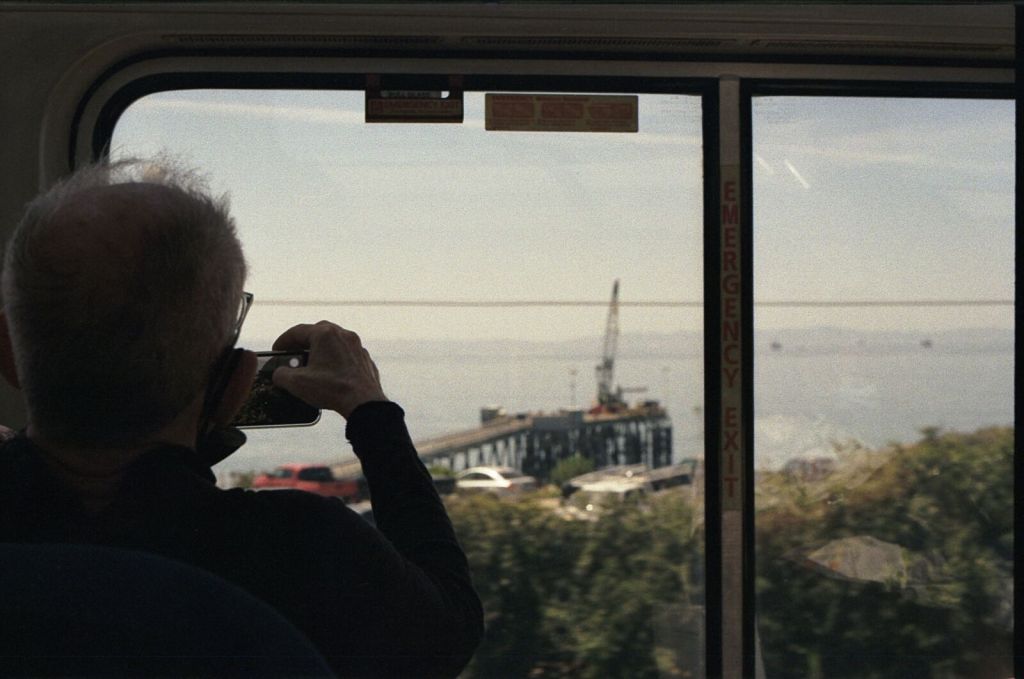
Now I was taking a 31-hour-and-43-minute train ride home to find out.
After The Break
The train brought me home, but the next month was not the homecoming I had imagined.
I stayed at the house for a little while. Then I left again and took a road trip around the Pacific Northwest, visiting friends and family while giving Heidi more time and space.
It still felt a little like exile. I was bummed that nobody was traveling with me. After being locked up for so long, I wanted company. But, I also wasn’t entirely healthy yet. My mind and body were still acclimating to new medication and a new version of myself.
Imagine driving on the freeway at 70 miles per hour for your entire life, then suddenly pulling onto a road where the speed limit is 25. That was what my mind felt like. I had been traveling at light speed. Now I was swimming through molasses.
I didn’t feel like myself anymore. And I knew this new version of me needed time to adjust.
Treatment had helped me become stable. It had not repaired everything my instability had damaged.
Over the following months, Heidi slowly became accustomed to having me home again. She watched me remain stable. Eventually, she began to feel safe with me again.
Rebuilding trust with my kids took longer.
I had spent a month learning new language, taking new medication, and developing new tools. They had spent that same month living with the aftermath of my chaos. I could not ask them to trust the person I said I had become. I had to show them, consistently and over time.
That slower mind has never completely felt like the old me. I still don’t make connections as quickly as I once did. Some part of me continues to miss the speed, even though I know where that speed could take me.
Over several years, my doctors and I have found different medications that work better for me. I feel closer now—not necessarily to who I used to be, but to who I want to become. If only the insurance company would consistently approve the medication that works, that would be fucking lovely.
What Changed
Before The Break, having a thought and expressing it were often the same action. My mind moved at light speed, forming connections and sending them out into the world before I had considered whether anyone else wanted them.
Medication and therapy created space between those two things.
I once described the change as going from light speed to driving 80 miles per hour in a 60-mile-per-hour zone. My mind is still fast. When I’m alone, I can sometimes let it accelerate again and do the processing I need. But it no longer feels completely uncontrollable. It also seems my brain moves at the wrong speed. Light speed a lot, but then it can’t make up its mind if it wants to move at 80 again or down to 25.
I possess my thoughts a little more than I used to.
That possession came with a cost. Conversation feels more laborious now. I have to keep kicking my mind into gear to remain engaged with what someone is saying. Before, I could listen, respond, make connections, and produce something surprising without noticing the machinery. Now I can feel the machinery working.
Dopamine helps. If my brain catches even the slightest whiff of it, everything lights up. Connections begin forming. Curiosity takes over. Conversation becomes easier.
The difficult part is everything that doesn’t provide that spark. It isn’t that I don’t care. Sometimes I care deeply but struggle to remain engaged—or to make that engagement visible.
I don’t know whether other people notice, because I work very hard to make sure they don’t. I listen. I respond. I ask questions. I monitor whether I am interrupting, overexplaining, or offering information nobody requested. From the outside, the conversation may appear natural. Inside, I may be manually keeping it alive.
Not all of that effort is false. I genuinely like being kind to people. I have said that I usually find dopamine in kindness. Caring for someone can provide its own spark.
The Break did not replace a fake version of me with a real one. It gave me more control over which thoughts become actions and which parts of myself enter the room. I lost some spontaneity and ease. I gained the ability to pause, choose, and possess my own mind.
What I Learned
If I could speak to the Adam standing beneath that open ceiling, trying to keep everyone calm, I would tell him:
Oh shit, man. Things are going to get fucked up for a while. Not just for the next two seasons. For the next five years. This is only the beginning. But hey, don’t worry. You’re going to be happier in the end. You’re going to become stable, strong, and independent.
Well, except for the four kids and two cats who will still need you.
You might lose this home. You might lose the family dynamic you’re working so hard to protect. Your future may look nothing like the one you are trying to hold together. But you are going to gain much more if you buckle down and go through it.
Put on your big-kid pants.
There’s work to do.
Eventually, you will learn how to have a mind like water.
Or a mind like a goldfish.
Or maybe you’ll become a goldfish with a mind like water.
You will learn to keep moving—swimming, floating, drifting down the hill instead of fighting every current. You won’t need to control every outcome or carry every possible version of the future at once.
You will stop worrying so much about what other people think of you.
For the first time in your life, you will feel confident and secure in who Adam is.
What Remains Private
This is the blog-post version of The Break.
The complete story involves forty-two years of my life: my family, my faith, my relationships, my mistakes, the ways I was hurt, and the ways I hurt others. It all came to a dramatic climax right around the age when many men have a midlife crisis.
Mine just took the form of flipping everything on its head and asking:
Could we start again, please?
 Wygle Wide Web
Leave a comment